
Written essay, Society and Culture, Goldsmiths, 2022
A related note to SKIN, Theraputic Textiles
A related note to SKIN, Theraputic Textiles
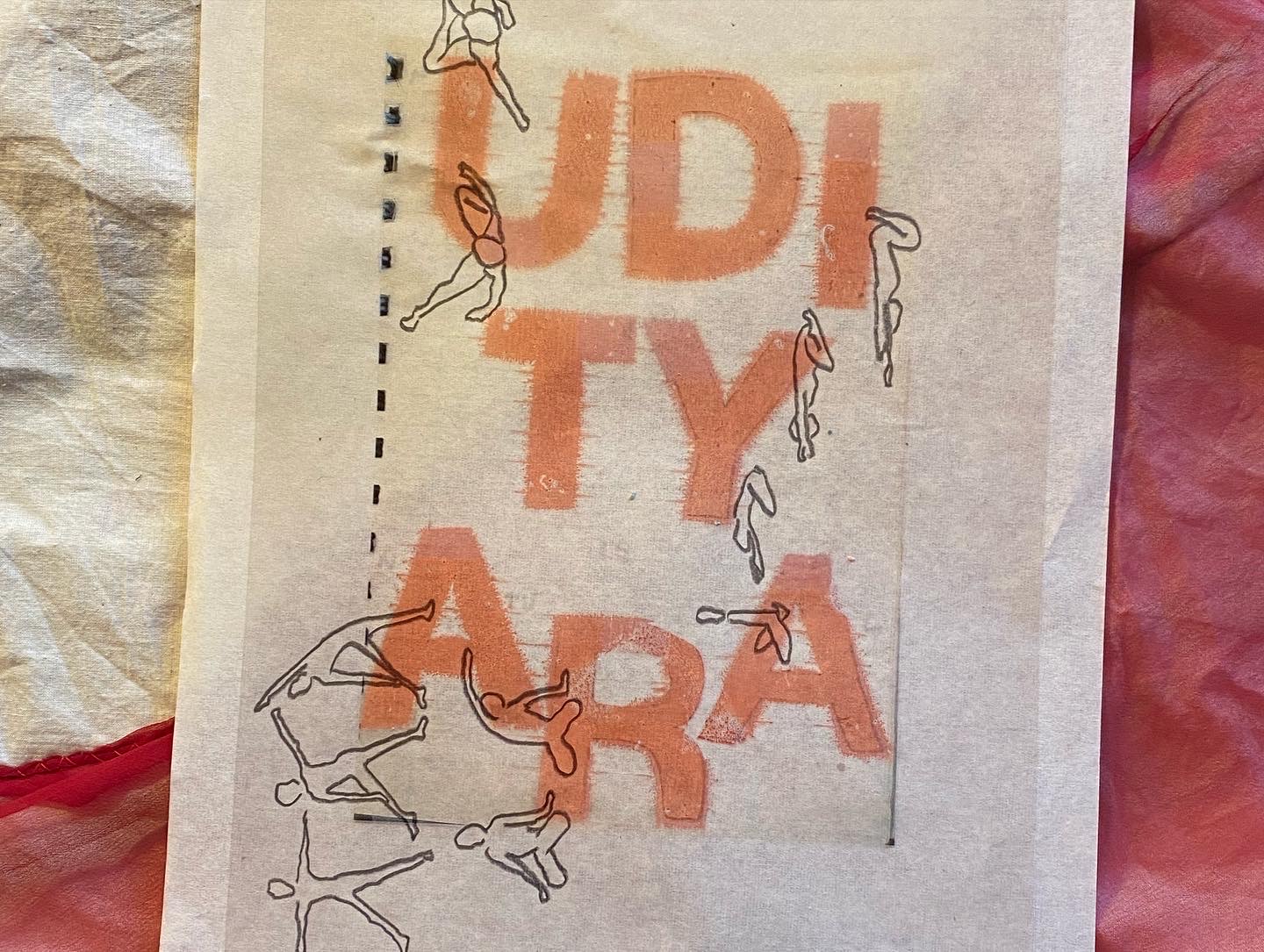
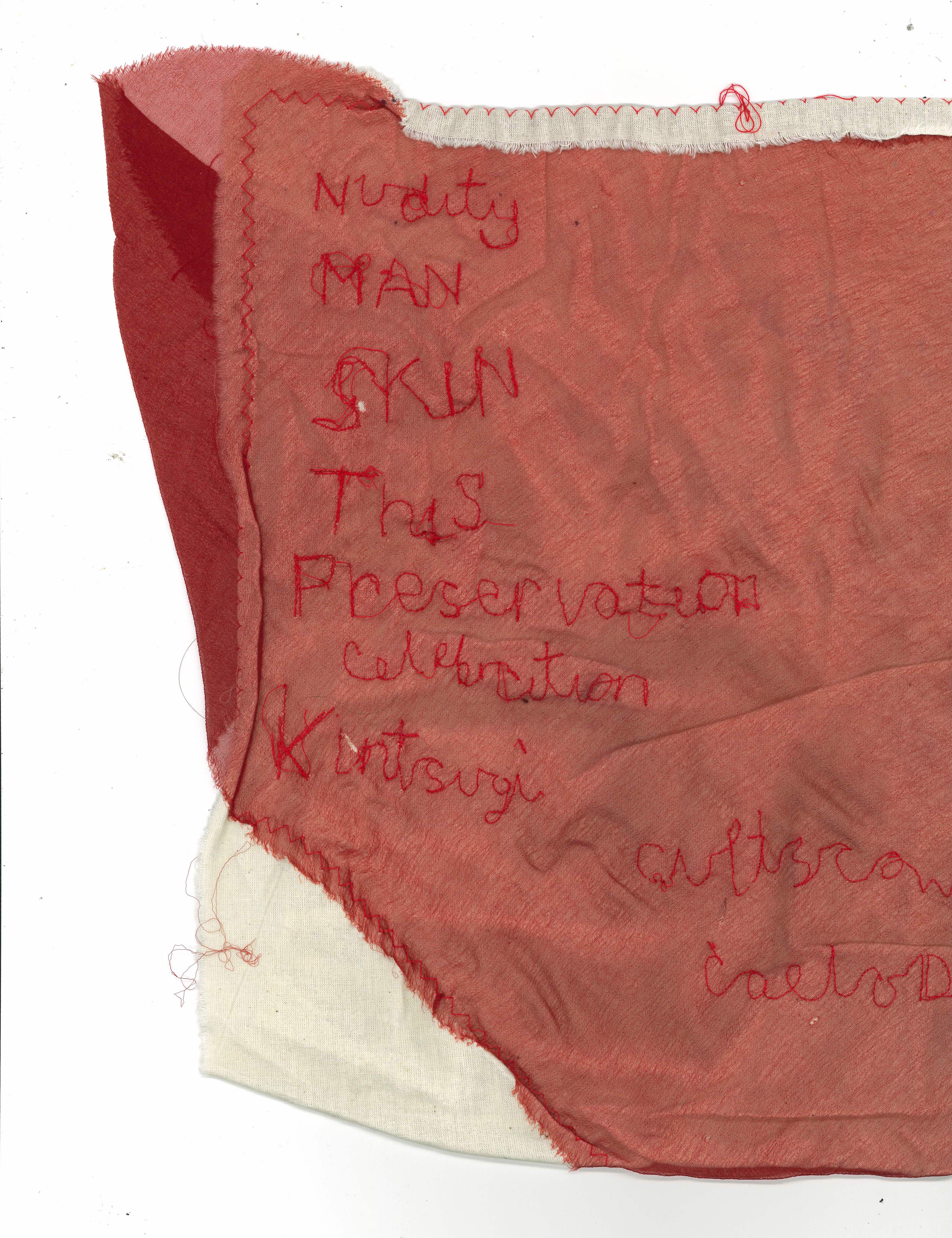
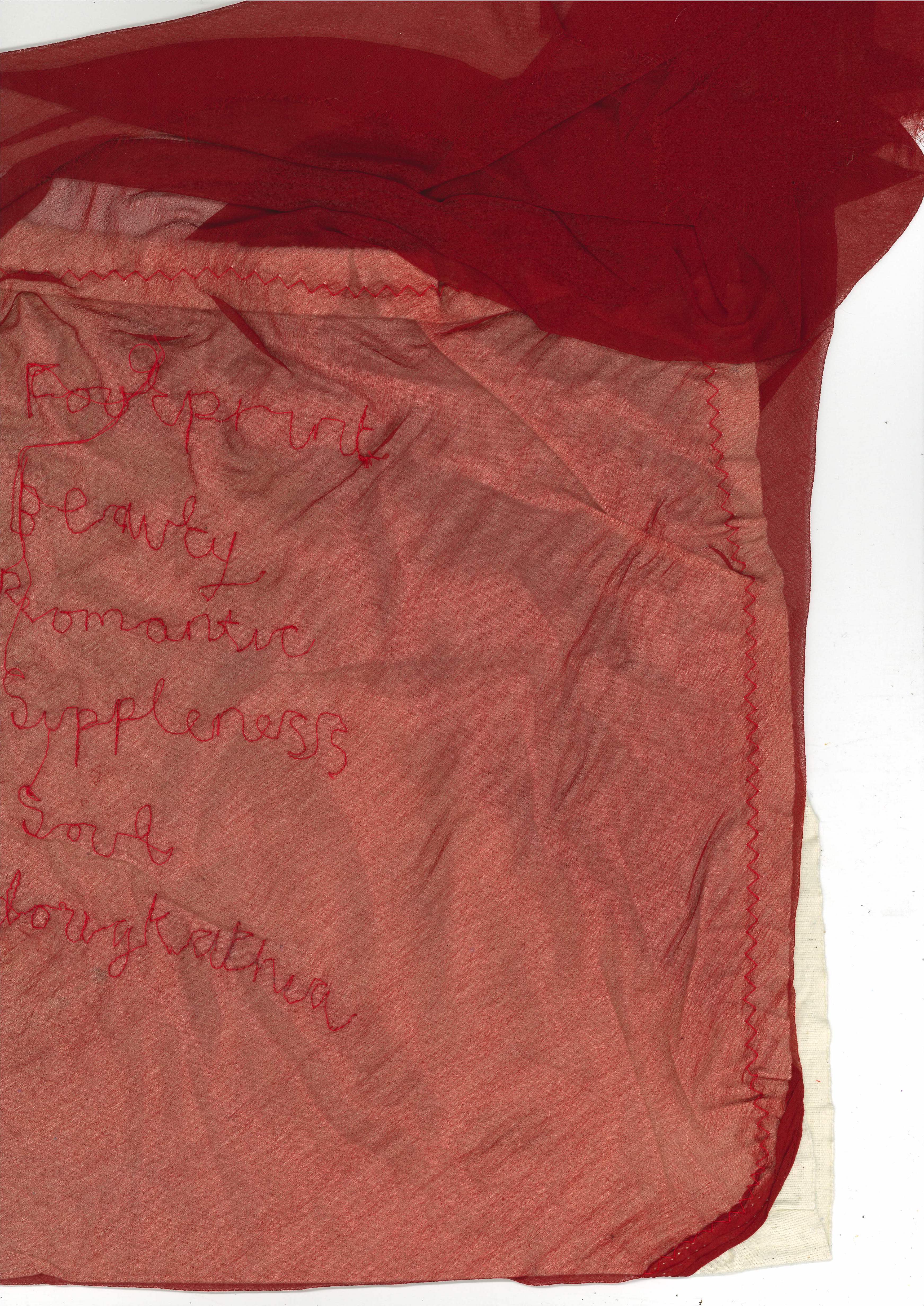
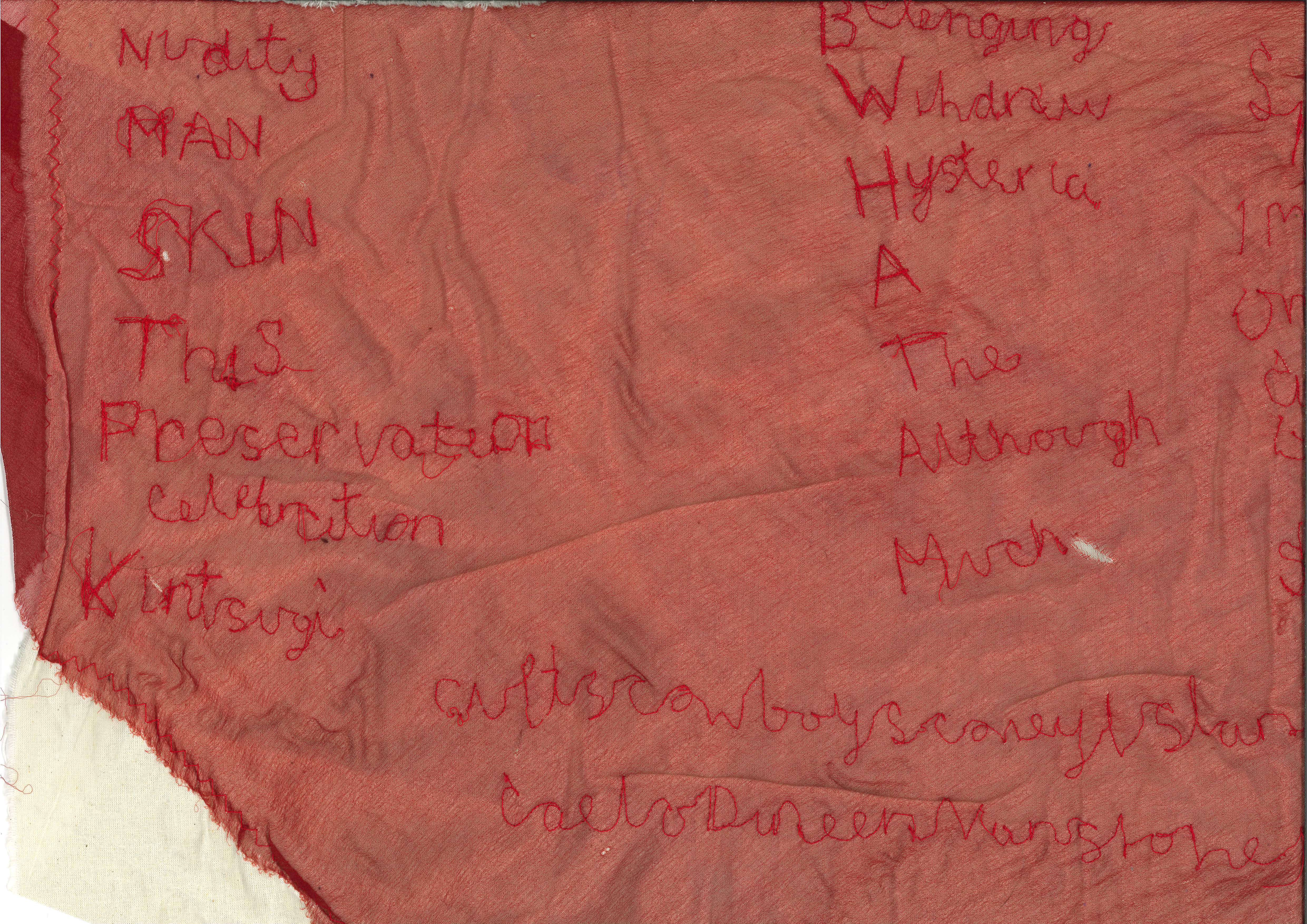
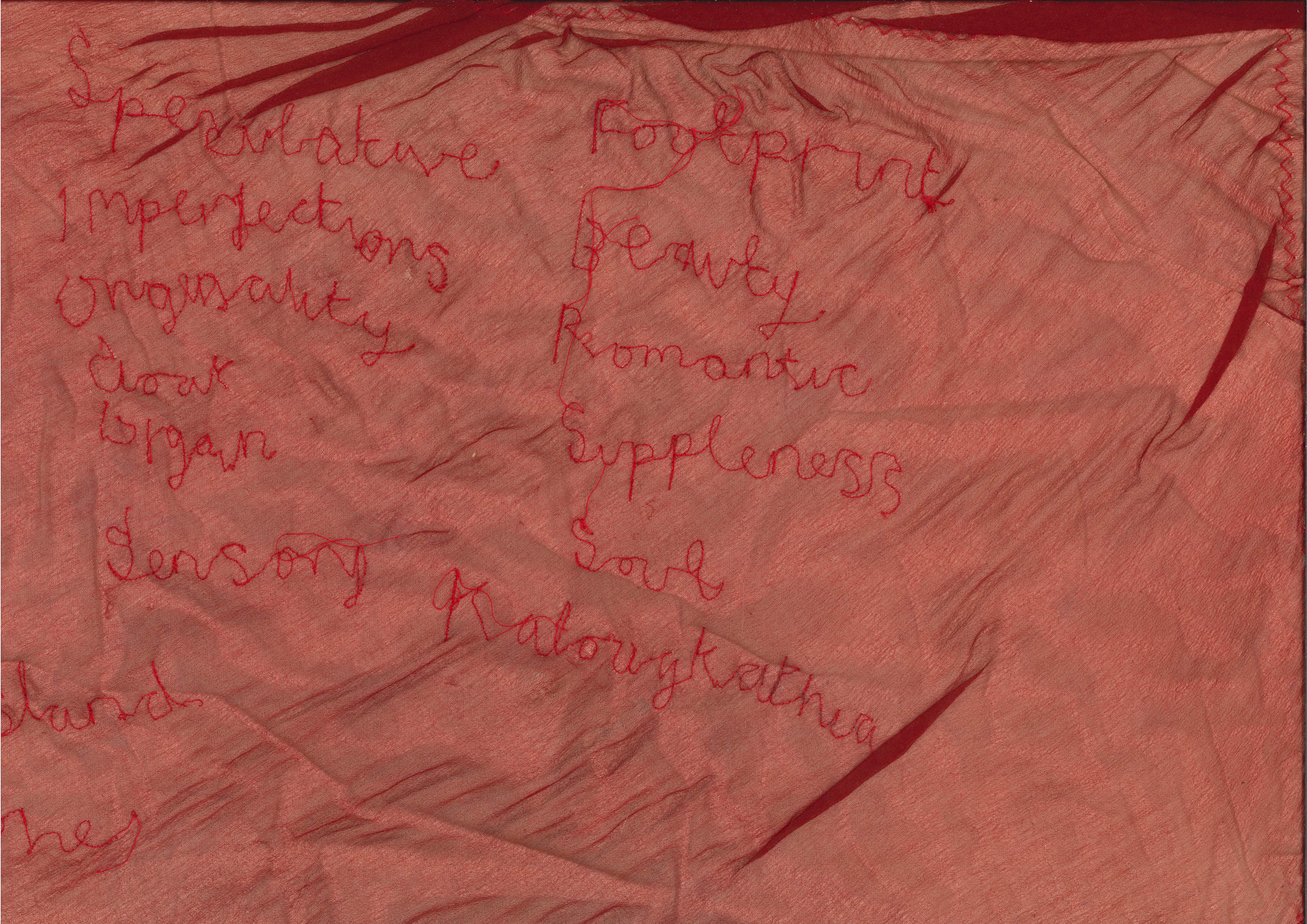
C U L T S
C O W B O Y S
C O N E Y
I S L A N D
C O W B O Y S
C O N E Y
I S L A N D
n u d i t y i s n a t u r a l
The word nudity’s first origins date back to the Middle Ages, both nake and to naken meant to simply strip someone of something. In the context of ’Cults, Cowboys, and Coney Island’, we will be interpreting it as would have been back in 500-1500.
nudity /ˈnjuːdɪti/ : the state or fact of being naked, without usual covering, the fact of being
expressed strongly and not being hidden. (Oxford English Dictionary)
Nudity and nudism is a concept championed by many different groups such as the FKK and anarch-naturalists in their ecological world-views, preceded by the original Adam & Eve, but the employment of nudity used by our collective (The Natural Nudity Collective), the subject of this investigation, is slightly different.
nudity /ˈnjuːdɪti/ : a state of mind; to be honest and open, both mentally and physically; to
embrace imperfection as one’s natural state
The group developed in this project was formed in an activist response to the booming social media industry and the impact of this on people’s mental health surrounding body image, attempting to infect mainstream mentalities. Cultural terror-forming. The collective explores the skin as the canvas of our bodies and innate armour, looking into the cultivation of a second skin as a creative therapeutic process.
“MAN is alone, desperately scraping out the music of his own skeleton, without father, mother family, love, god or society
And no living gabbing to accompany him. And the skeleton is not of bone but of skin, like a skin that walks.”
And no living gabbing to accompany him. And the skeleton is not of bone but of skin, like a skin that walks.”
The core belief is that there is beauty in imperfection, that in fact the imperfect is what makes us beautiful. Acne, stretch marks, burn barks, birthmarks, scars, varicose veins, pigmentations and so on. The group campaigns for the celebration of originality in our appearance, and for the process of nurturing these ‘imperfections’ as commodities, helping develop psychological endurance. We devised that if we took the emotional energy is used by the average person to conceal or eliminate ‘imperfections’, and transferred it into energy glorifying those flaws, we would be much healthier, physically and mentally.
SKIN - the largest organ in the body, and essential to our innate being. The natural cloak of our biological skin acts as a filter and a protection against the dangers of the world around us and is a home to a multitude of bacteria and microorganisms. This ‘second skin’ aims to parallel what out natural skin provides in a more psychological manner, protecting us from the tsunami of psychological challenges faced in the modern world. As argued by medieval physicians and commented on by writer Steven Conor, the skin is quite literally what binds us together, and the “conception of skin … is indispensable to this concentric view of the body within the universe.” Our skin is our natural packaging, and what we will inhibit for rest of our lives. It has been explored as our body’s canvas in historical cultures ubiquitously. Forms of second skins can be identified in the mummification of how Egyptian rulers, in scarification in subsaharan Africa, in ‘tagging’ cultures in Russian prisons, to an obsession in how people adorn themselves in the current day. The skin has had enormous significance and meaning universally, both good and bad. Conor references the skin as “a marking of time itself”, wrinkles and all, much similar to tree rings, denoting age and endurance and weathering.
“This mantle of suppleness, beauty and warmth will accompany me forever, will lap me in its illusion for the long passage into eternity.”
Preservation, and celebration. The skin has many connotations apart from the traditional scientific role it plays - viewing the skin is a romantic organ, a cosmic and playful surface, love poetry plays upon the role of skin as the ultimate connector, “See how she leans her cheek upon her hand.// O, that I were a glove upon that hand // That I might touch that cheek!”.
Skin is Time and Lets Itself be Flayed
He saw, or thought he saw,
his skin become time’s curvature …
Having peeled it off, he holds it
up for further inspection
in this troubled classical landscape:
Apollo’s deep bare garden.
and his a skin of tenderness,
a hammock of social obligation
and naked reconciling.
…
- Iain Bamforth
He saw, or thought he saw,
his skin become time’s curvature …
Having peeled it off, he holds it
up for further inspection
in this troubled classical landscape:
Apollo’s deep bare garden.
and his a skin of tenderness,
a hammock of social obligation
and naked reconciling.
…
- Iain Bamforth
‘Skin is Time and Lets Itself be Flayed’ is a musing on anatomy and mercantilism, the poem turns on the cupidity of knowledge, and the desire to get beneath the skin of stock responses – accompanied by the suspicion that skin-deep is all the profundity we get. It is important to not only acknowledge the role it plays in protecting us from harm, but also to see how it is a connective surface, and how in this context, can inspire us to keep up with unprecedentedly need for evolutionary change.
This textile is a material exploration of one’s individual perception of skin originality. The background to this process has been constructed as a form of speculative design in order to fully explore this fictional reality as a form of social science, in the words of Lubomír Doležel, an “experimental laboratory of the world-constructing enterprise.” In these artefacts presented, we are attempting to trigger an imaginative response in the viewer, how this material could to develop an innate love for yourself. The duties imagined of caring for it over a period of time with care and dedication, brushes, moisturisers, petri-dish containers - artefacts and articles for care are significant as they contribute to the potential of this material and garment-esque form. It’s background also subtly also taps into this western craze of beloved ‘vintage’ items, and growing commodification of the ‘pre-loved’. A slow realisation of how the fashion industry is having enormous impacts on our planet is sinking in, and this mindset could greatly impact the future of our planet. If we apply the same theory of caring for what is damaged or broken, and not flippantly discarded, to the idea of a second skin that embodies this exact principle it could have an equally beneficial ripple effect. Theoretically drawing on forms of Kintsugi - the art of repair.
In our contemporary society, the sense of belonging in our own skin is becoming increasingly more blurred. False advertising of unhealthy body standards is rampant, and has an enormous impact on the younger generations’ mental heath. This new cultural wave has contributed to a multitude of psychological conditions such as depression and anxiety, spawning eating disorders (anorexia, bulimia, diabulimia) and body dysmorphia. In many ways this project almost
Initially launched as a body-positive, inclusive community trying to take action against the growing media standards of the ‘perfect’ body, the NNC swiftly developed into an activist collective that fought prejudices. This can also be applied to increasing acceptance and celebration around transsexuality and intersectional conversations, when transitioning, your body changes and thus so does the narrative history of your skin. With shifting hormones, your skin would also inevitably provoke a shift in your skin, this material could help people undergoing such changes to adapt and orientate emotions of belonging and comfort in ones’ own body. The main conjecture of this project aims to work, ironically, below the surface. Fighting the fore-mentioned issues in a more prolific and internal way, targeting the source of these problems. One can see how these issues stem into greater problems, a form of hysteria. R.D. Laing argues that when a person is secure in his own being, they do not arise with anything like the same force, since there is no occasion for them to arise and persist in this way (regarding anxiety and the basic ontological form). This ensues an investigation into the cosmetic phenomena as a form of chemical dependancy on beauty products in some extreme circumstances. Plato's concept of kalókagatheia (“the good and the beautiful”) supports a potential reasoning for this - it assumes a correspondence between beauty of bodily form and a beautiful disposition in the soul. We are often preoccupied with what others think of us, influenced by our appearance, that we try and manipulate our physiognomy to align with our own personal ideals of ‘beauty’, manipulating how people might perceive of us as people. Neoplatonic interpretations of Plotinus’s passage from Enneads, entitled “beauty”, written several hundreds of years ago, ascertains a link between inner beauty that needs to be carved out, revealing the beauty of the soul that is hiding underneath reflects contemporary makeover discourses:
“Withdraw into yourself and look. And if you do not find yourself beautiful yet, act as thus the creator of a statue that is to be made beautiful: he cuts away here, he smoothes there, he makes this line lighter, this other purer, until a lovely face has grown upon his work. So do you also: cut away all that is excessive, straighten all that is crooked.”
Plotinus’s perfect statue features a beautiful soul as a result of uttermost moral being, but what if we reversed this, and adapted the definition of beautiful exterior, being one that reflects a disposition of confidence and pride in our unaltered form, becoming a signifier of true ‘beauty’, and therefore a pure soul.
A part of the NNC belief system relies upon a theory that we live in a society, that because of pressure from social medias projection of body image and appearance standards, is developing a different form of chemical dependancy specifically referring to the psychological integrity regarding the self-esteem of a majority of our population depending on cosmetic infrastructures. Mental illness stemming from self-perception and skin includes that of ‘hysteric’ manners in which people loose control of themselves and their emotions depend on their physical state. One intention of this process’ orientation, this generation of your own ‘second skin’ in which you can inhibit and from which you can shed, as you like, was to be a form of creative therapy. The cultivation process parallels a form of ritual, even folklore. Rob Walting comments on Folklore / ritual as a basis for personal growth in Using the creative Arts in Therapy, that the continuation of ritualistic and folklore-esque traditions have been shown to have enormous range of functions, including sharing wisdoms within society, confronting taboos and helping to explain the mysteries of man’s place within society itself. Ritualistic, rehearsed movements can be seen to prepare the body for action, physical or psychological. Claims relating to the re-imagination of the skin having therapeutic potential have not yet been scientifically substantiated, however relating them to these forms of creative therapies and their effectiveness, there is sufficient evidence to believe that similar outcomes could be produced using the narrative of these materials in order for people to better comprehend themselves.
The manifestations of these physical fictions were not only for the benefit of our audience as invitations to the make-believe, the technical processes deployed were essential to the refinement of our visual language and the fictional contextual development of these artefacts. Tacking purity, impurity and perception of modern moral values, we experimented with different forms, originally using recycled natural, sustainable ingredients. The processes in which we proposed the cultivation of this biologically grown membrane reminiscent of human skin were heavily inspired by lab-grown meats and scientific programming and DNA cultivation. A material investigation followed looking into organic leathers and experimentation with what we could imagine transforming into skin-like earthy materials. Questioning how mango leathers, pineapple leaves, orange peel (vegetable, fruit / food skins), cactus skins, aloe vera branches, traditional papyrus adaptations could become adapted materials for this process. Settling on experimenting with dried corn sheaths and corn thread helped us imagine a way in which this could be realised. In our current global-environmental state and our’s worlds’ rapid climate change, material innovation could be a key in the way we move forward and make a difference in future generations. There have been incredible breakthroughs in investigating new materials, in many areas of design. On an individual scale, the work of Fernando Laposse in his Toxotmotle project, has been a constant form of inspiration for me for many years. Thinking about a food chain of thought and cycle of imaginations. In my eyes, he essentially builds a culture based upon a new form of material, that’s aim is in itself to feed and regenerate the culture it’s itself is aiming to help. The premise being intrinsically rooted in naturalness, sustainability and accountability in terms of our materials is essential, the NNC project exemplifies the power of design to transform, repair, and promote social progression in a shift in societal expectations of beauty.
Although this organic experimentation was innovative and exciting, the tone of voice was not exactly on point. Aiming for more realism transformed the process into an experimentation with latex and silicon. The inspiration for this came from scientific developments around organic and natural systems that had been replicated and become man-made, investigating skin-graphs, lab-grown meats or 3D printed organs. My 1.5 project around pride and prosthetics heavily fed into the moral theories explored here where I looked into prosthetic breast replacements and empowering women through owning the pain through aesthetics and not just trying to coverup undergone trauma. The materiality of this project was a major learning curve exploring professional grade silicon and how it can be manipulated or adapted. These textiles spark curiosity in the abstraction of their origins’, and generate a conversation within themselves while attempting to have an impact on their wider audience. Taking from ‘The Wagging Tongue’ (that even drools) exhibited in The Design Museum, realism not only instigates a form of immersivity, but And Bradford’s inspiration comments on how “one’s emotional experience of the world can be intensified when in a situation with conflicting sensory information”, substanciating that a more realistic approach could reinforce the effect on the user experience, channeling texture, weight, translucency and colour. These prototypes, are not a form of disguise or costume, though there is a theatrical beauty and elegance of the materiality in its representation of ‘non beauty’. They aim to represent beauty in an almost grotesque form, and they reflect as such in how they maintain a repulsive fleshy-realism in their nature. Rémi Astruc has argued that the three main tropes of the grotesque are doubleness, hybridity and metamorphosis. Beyond the current understanding of the grotesque as an aesthetic category, Astruc identifies the grotesque as a crucial and universal anthropological device that societies have used to conceptualise change. Being able to metamorph - not into a completely different being, but just into another form of your own skin in which you feel more empowered and confident - is fascinating. The adaptation of abstract theoretical beliefs into material culture is a simple explanation of what we’ve achieved here. Being able to transform these strong moral values into existing processes as a form of speculative design is constructing the possible in the improbable allows us a freedom of imagining the potential impact this could have. This is, after all a theory rooted in real-world current affairs and ongoing social sciences, what ripple effect could this material have in tangible terms. A potential psycological impact would mean less cravings for cosmetic appliances, therefore an effect on the beauty industries - less demand for palm oil extraction, a major driver of deforestation of some of the world's most biodiverse forests - boots, Superdrug, and countless makeup companies. Less cosmetic testing on animals, and an appreciation for their place and right on our planet could cause more accordance and harmony with interspecies relations. A new material supplementing the need for fast fashion goods - world uses an estimated 80 billion pieces of clothing every year and the UK alone produces nearly 50 tonnes of carbon emission annually; a decline in clothing turnovers per annum, decrease in modern day slavery feeding these organisations, such as primark, shein, H&M, boohoo, forever 21, to just name a few. Subsequently an impact on our carbon footprint globally and a decline in detrimental climate change. The disintegration of these infrastructures would of course have an effect on the setup of our city scapes, our commercial infrastructures disappearing, spawning new green spaces, fresh air, different types of trade and shift in the materiality of social interactions and exchanges.
Although it is exciting to imagine the positive impacts of these speculations, one must always speculate how it could go wrong. What are the potential detrimental effects, in an imaginary utopia, one can always a dystopian fracture. On a simple scale, the collapse of these organisations could displace the people who rely on these jobs, impact those (whether positively or negatively) who reply on the profit and income from these organisations, throughout the hierarchical employment scales - from people on shop floors, to CEO’s and directors. However on a more sophisticated scale we have to interrogate the morality around trying to simulate human body parts. Replication of the human form, and scientific breakthroughs and innovations are exciting and admirable, but what happens when it goes a step too far and we loose control, when these processes fall into the wrong hands? Especially around the conversation of DNA, the extraction and reproduction of, feeding potential cloning and other controversial scientific affairs, there is high controversy around the questionable motives of these innovations. If these second skins are genetically aligned to their owner, is there a potential for identity theft and fraud if one’s skin is stolen, forged or lost? The human obsession with skin has had gruesome and horrific consequences. Flaying is a medieval form of execution in which skin is removed from the body and attempted to be kept intact, this has been sadistically adopted and fed into murder and torture. Killers who have skinned their victims and become obsessed with playing with the remains, using them to make all manner of utensils, furniture, and art - skin chairs, lamp shades, gloves, corsets, leggings, a belt made of nipples and noses, bone eating utensils, lips hung as decoration. The Nazis also deployed this tactic, making lampshades out of skins taken from Jewish victims in the Holocaust. This potential for design subversion is horrifying, there will always exist within society those embedded with malice and cruelty. Who knows what the opening of this line of inquiry could breed in terms of distortion and blundering.
Much like a snake, one would be able to regenerate, shed and reproduce these coats of armour unveiling new ways of being, in a natural process of self-preservation and growth, however unlike a snake, the cause and effect of these artefacts do not have a definitive start and finish.